

When Max Needle began building Diamond Arc Legacy, he was coming from an intense operating environment.
As an executive inside a private equity-backed company, his work had been defined by a relentless pace, constant decision pressure and a fully scheduled calendar. Productivity was closely tied to how he evaluated his effectiveness as a leader.
Max described carrying what he called “productivity anxiety” – a persistent sense that every hour needed to produce visible output.
As he moved into entrepreneurship, he recognized that continuing to operate this way could eventually become a constraint. He wanted to build a successful firm while also creating a life where he could show up fully as a husband and father.
Why Executive Coaching Now
As a first-time CEO, he was building a company where his leadership model would directly shape how the business operated. He wanted to strengthen his decision discipline, clarify his priorities and structure his time around the work that would create the most leverage as the business grew.
He also wanted a coach who understood the operational realities of growth-oriented businesses. My experience building and exiting a company and leading inside a private equity-backed environment meant I could engage both as a coach and as a practical thought partner in his business.
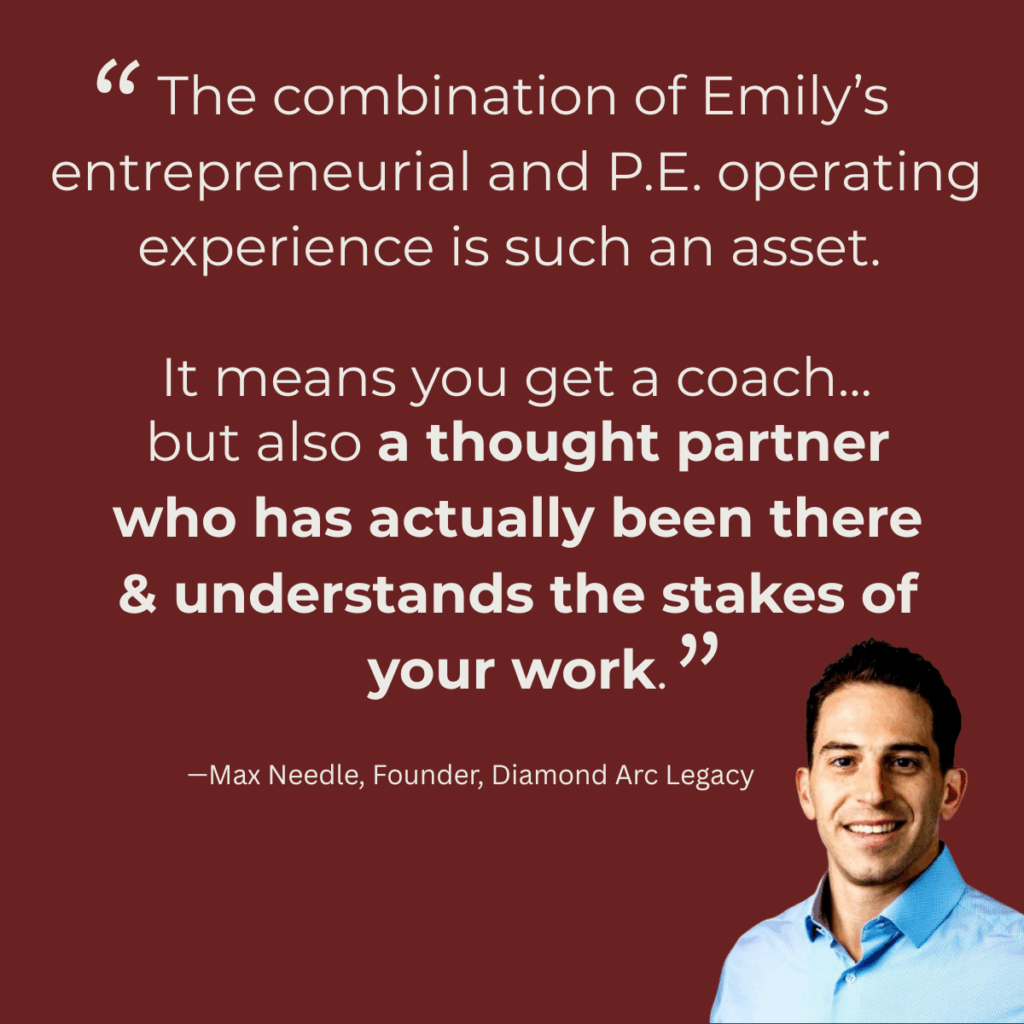
As Max shared:
The Engagement Focus
Max selected a coaching engagement with bi-weekly sessions.
Our focus was to clarify the leadership model he wanted to operate from as a founder, strengthen his decision discipline and build operating rhythms that supported sustainable performance while growing the business.
The Leadership Shift
As we worked together, Max’s leadership became more deliberate and less driven by constant activity.
Key shifts included:
• Clarified leadership values – Max revisited the personal values guiding this stage of his life and career. This created a clearer decision filter for opportunities, partnerships and how he structured his time as both a founder and a father.
• Disciplined prioritization – He implemented a weekly “Big 3” framework to concentrate attention on the most strategically important work. This reduced the tendency to fill every available hour with lower-impact tasks.
• Reduced urgency-driven productivity – Through what we called the “whitespace practice,” Max stopped filling every open moment with activity. Creating intentional space improved decision clarity and reduced the pressure to optimize every hour.
• Greater trust in his leadership style – As he developed his approach to deal sourcing and founder relationships, he became more confident operating from his own strengths instead of defaulting to industry expectations.
Through the engagement, his leadership became anchored in clearer priorities and more deliberate decisions.
The Business Impact
As Max’s leadership approach evolved, the business began to move forward with clearer priorities and less internal drag.
• Improved decision clarity – Decisions about opportunities, partnerships and priorities were made more quickly and with less second-guessing.
• Reduced internal drag – By concentrating on the work that created the most leverage, he reduced the mental churn associated with trying to optimize every hour.
• More strategic use of time – His schedule increasingly reflected the work that actually moved the business forward rather than reacting to the pressure to appear constantly productive.
• More sustainable operating rhythm – Progress no longer depended on a fully saturated calendar or constant intensity.
Max entered coaching while launching his firm with the intention of building a leadership model that could support both business success and a sustainable life.
Through clearer priorities, stronger decision discipline and a more deliberate approach to time, he developed a leadership rhythm aligned with the company he intends to build.
Let’s explore what leadership capacity that supports sustainable growth could look like in your business.
Book a free 20-minute coaching discovery call here.


